The Queen Bee: Heart and Soul of the Colony
The Queen Bee: Heart and Soul of the Colony
In every honeybee hive, one bee stands above the rest — not because she gives orders, but because she gives life. The queen bee is the reproductive engine of the colony, and her presence shapes everything from the hive's mood to its honey production. Here at Tom's Coastal Honeybees in Apollo Beach, Florida, understanding the queen's role helps us appreciate the incredible journey from mangrove flower to raw honey jar.
What Makes a Queen Bee?
A queen bee is genetically identical to every other female bee in the hive. What makes her a queen isn't her DNA — it's her diet. When the colony decides to create a new queen, worker bees select a few young larvae and feed them exclusively on royal jelly, a nutrient-rich substance secreted from glands on the heads of nurse bees.
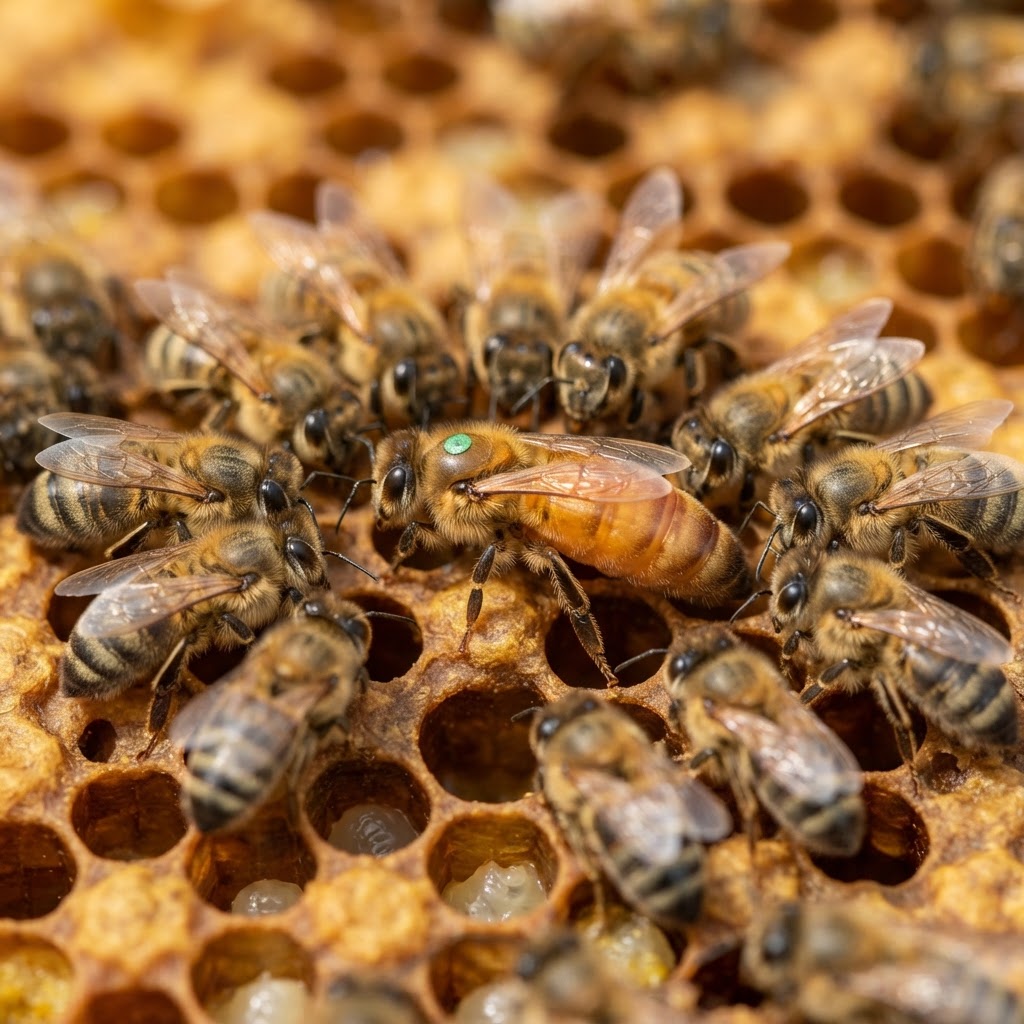
This royal jelly diet triggers a cascade of developmental changes. The queen grows larger than worker bees, with an elongated abdomen and shorter wings relative to her body size. Her stinger is smooth (not barbed like a worker's), allowing her to sting multiple times without dying — though she almost never stings humans, reserving her weapon for rival queens.
The Queen's Primary Role: Egg Laying
The queen's sole job is to lay eggs. During peak season in Florida's warm climate, a healthy queen can lay 1,500 to 2,000 eggs per day — more than her own body weight every 24 hours. She lays two types of eggs:
- Fertilized eggs become female worker bees (or, if fed royal jelly, new queens)
- Unfertilized eggs become male drone bees
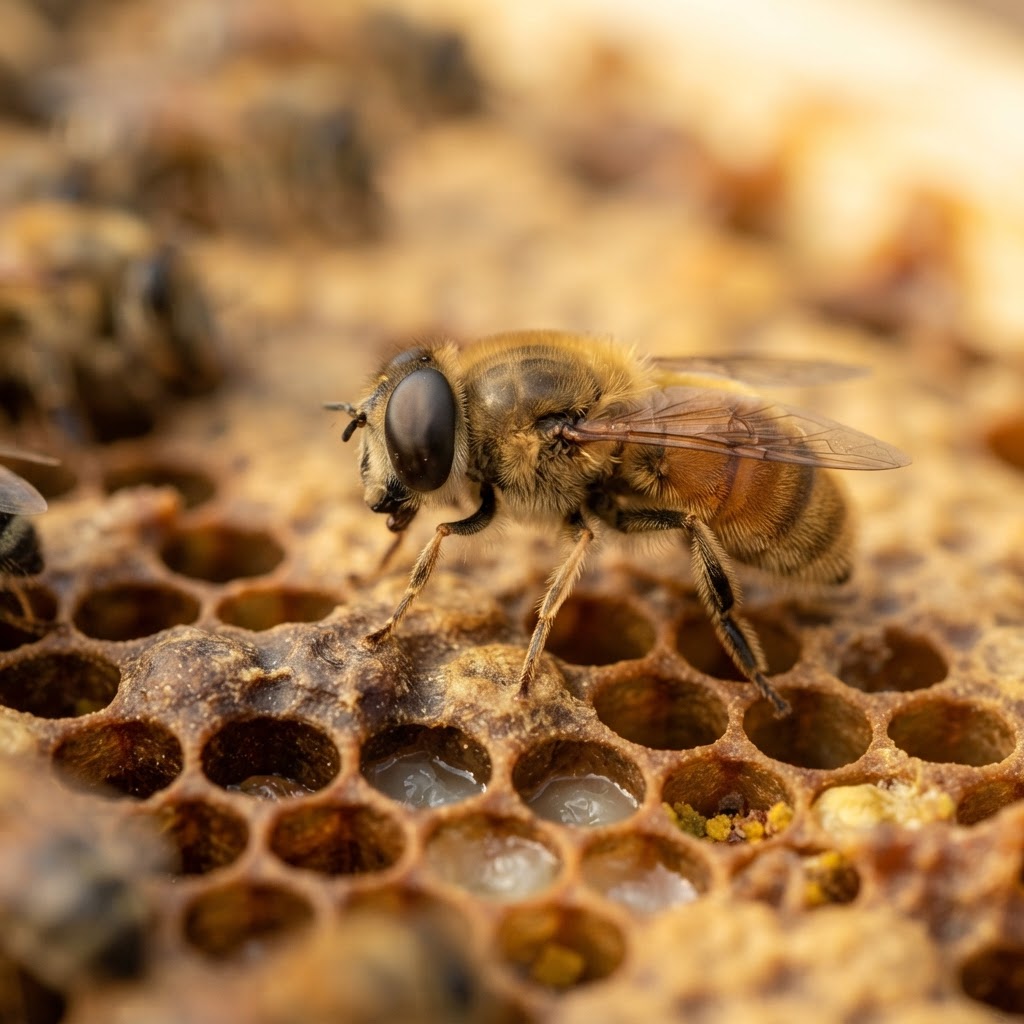
The queen can choose whether to fertilize each egg as she lays it, based on the size of the cell she's placed in. Worker cells are smaller; drone cells are larger. The queen senses the cell size with her body and releases sperm accordingly.
The Queen's Pheromones: The Hive's Chemical Glue
Beyond egg-laying, the queen produces a complex blend of pheromones called "queen mandibular pheromone." These chemical signals are the hive's nervous system:
- Colony cohesion: The pheromone is spread through physical contact as bees pass it from one to another, letting every bee know the queen is present and healthy
- Worker inhibition: The pheromone suppresses the workers' ovaries, preventing them from laying their own eggs
- Calming effect: The queen's scent keeps the colony calm and focused on their tasks
- Swarm prevention: As long as the pheromone is strong, the colony is less likely to swarm
If the queen dies or is removed, the hive knows within hours. The absence of her pheromone triggers panic: workers begin building emergency queen cells and raising a replacement from existing young larvae.
The Queen's Life Cycle
A queen bee's life is extraordinary:
Days 1-3: Egg stage, laid vertically in a specially constructed queen cell Day 3-8: Larval stage, fed exclusively on royal jelly Day 8: The queen cell is capped with wax Day 16: The new queen emerges by chewing through the cap
After emerging, the young queen spends several days maturing. She then takes her nuptial flight — flying to a "drone congregation area" where she mates with 10-20 drones from other colonies. She stores all this sperm in a special organ called the spermatheca, using it gradually to fertilize eggs for the rest of her life.
She never mates again. All the sperm she'll ever need was collected on that single flight.
How Long Does a Queen Bee Live?
A queen can live 2 to 5 years — remarkably long for an insect. By comparison, worker bees live only 6-8 weeks in summer. However, a queen's egg-laying productivity declines over time. After 1-2 years, many beekeepers "requeen" — replacing the old queen with a young, vigorous one to maintain colony strength and honey production.
The Queen and Our Coastal Honey
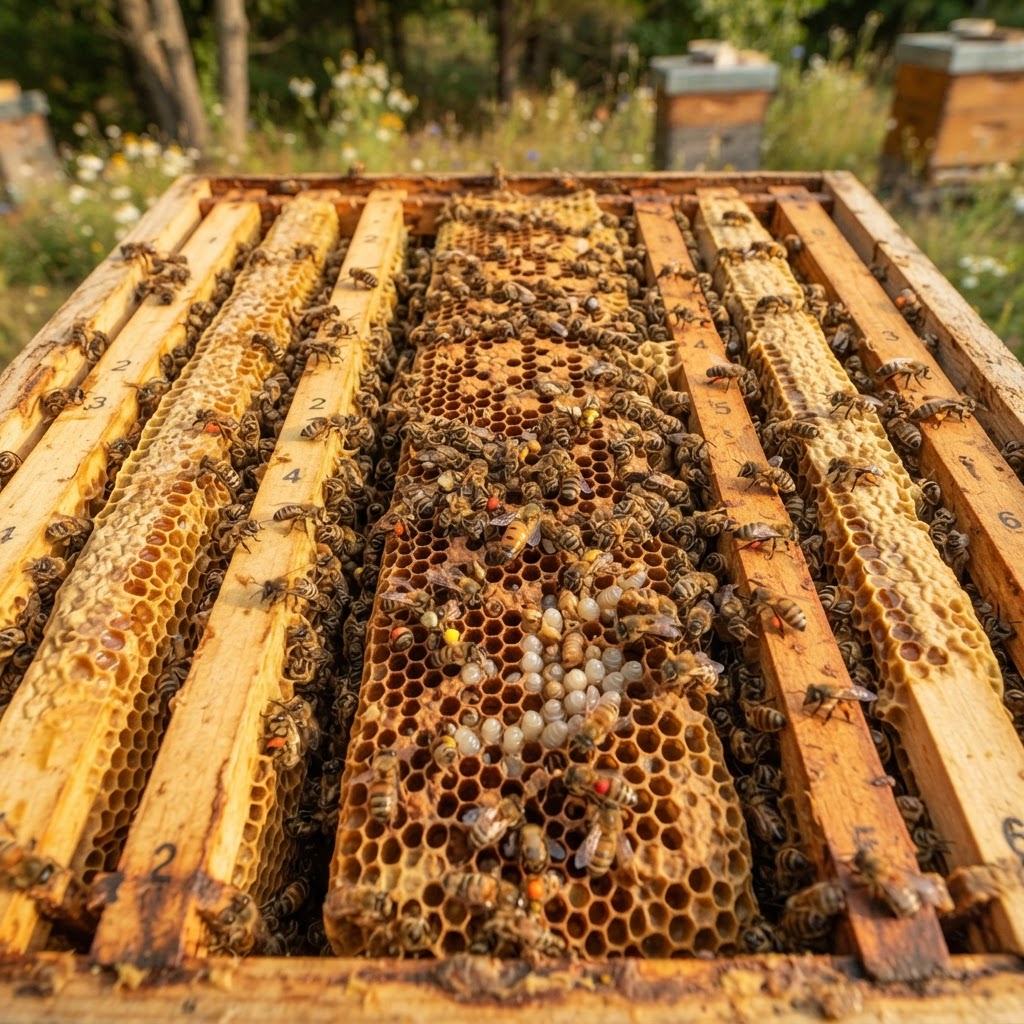
Here at Tom's Coastal Honeybees, our rescued colonies depend on strong, healthy queens. When we rescue a swarm from an Apollo Beach backyard or a Ruskin garage, the first thing we look for is the queen. If she's present, the colony will settle into their new hive and begin building comb within hours.
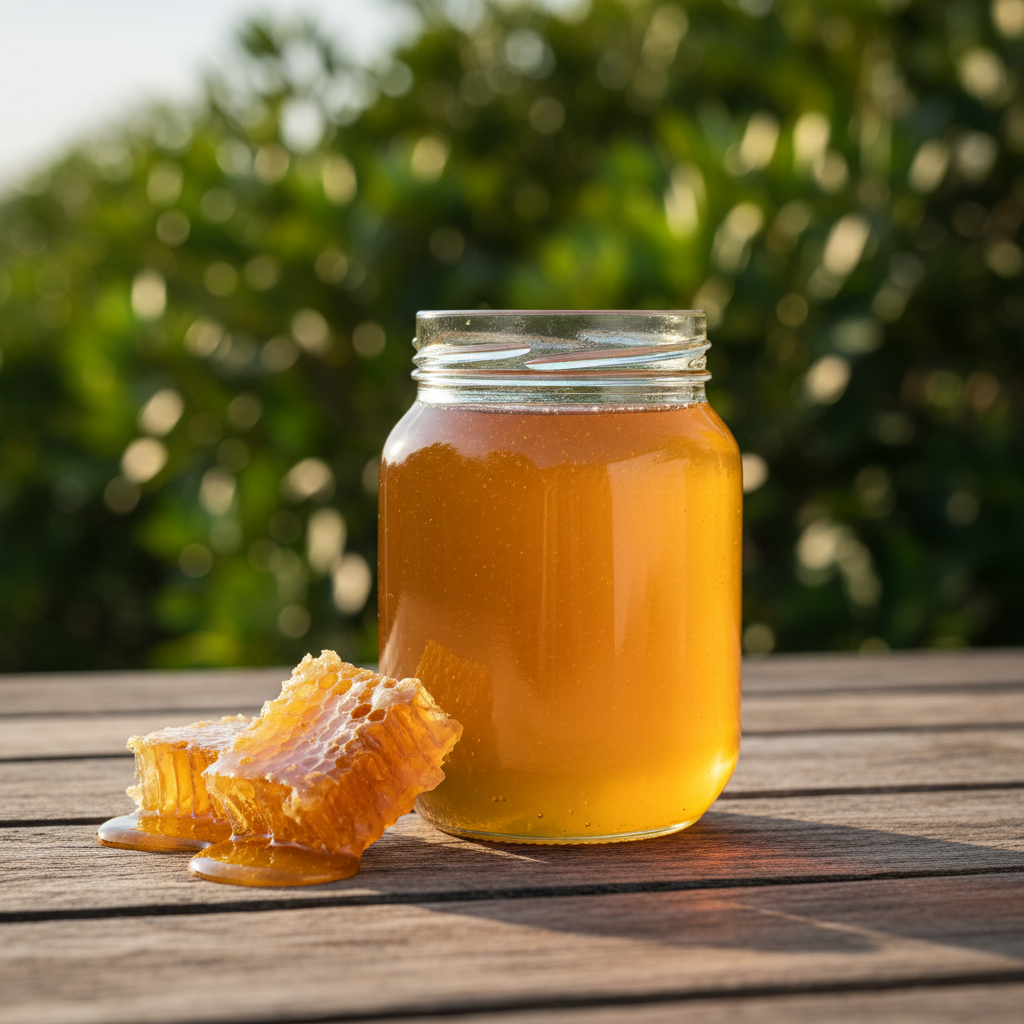
A productive queen means a strong colony, which means more foraging bees visiting Black Mangrove flowers, which means more of that incredible raw, unfiltered honey with its notes of caramel, vanilla, and butterscotch.
Explore how the entire hive works as a superorganism
The Queen's Court
The queen doesn't feed or groom herself. A retinue of 8-12 attendant worker bees constantly surrounds her, feeding her royal jelly, cleaning her, and disposing of her waste. They even lick the pheromone from her body and pass it to other bees through trophallaxis (mouth-to-mouth food sharing), spreading the queen's signal throughout the hive.
A Life of Purpose
The queen bee may not rule — but without her, the colony cannot survive. She is the heart that pumps life into the hive, the chemical signal that unites 50,000 bees, and the mother of every bee that collects the nectar that becomes our raw Black Mangrove honey.
The next time you taste our honey, remember: it all started with a queen.
Related Articles
Taste the Difference
Every jar of our raw Black Mangrove honey is the result of 50,000 bees working together. Experience the taste of Apollo Beach's coastal ecosystem.
Shop Raw Honey