The Complete Guide to the Honeybee Hive: How 50,000 Bees Work Together as One
The Complete Guide to the Honeybee Hive: How 50,000 Bees Work Together as One
When you crack open a jar of raw Black Mangrove honey from Apollo Beach, you're tasting the result of one of nature's most remarkable collaborative efforts. Inside every beehive, tens of thousands of individual bees work together with such precision and coordination that the colony functions as a single living organism — what scientists call a "superorganism."
In this comprehensive guide, we'll explore how a honeybee hive works, from the architecture of the comb to the division of labor that makes it all possible. Whether you're a honey enthusiast, a budding beekeeper, or simply curious about the natural world, understanding the inner workings of a beehive will give you a deeper appreciation for every golden drop.
The Hive as a Superorganism
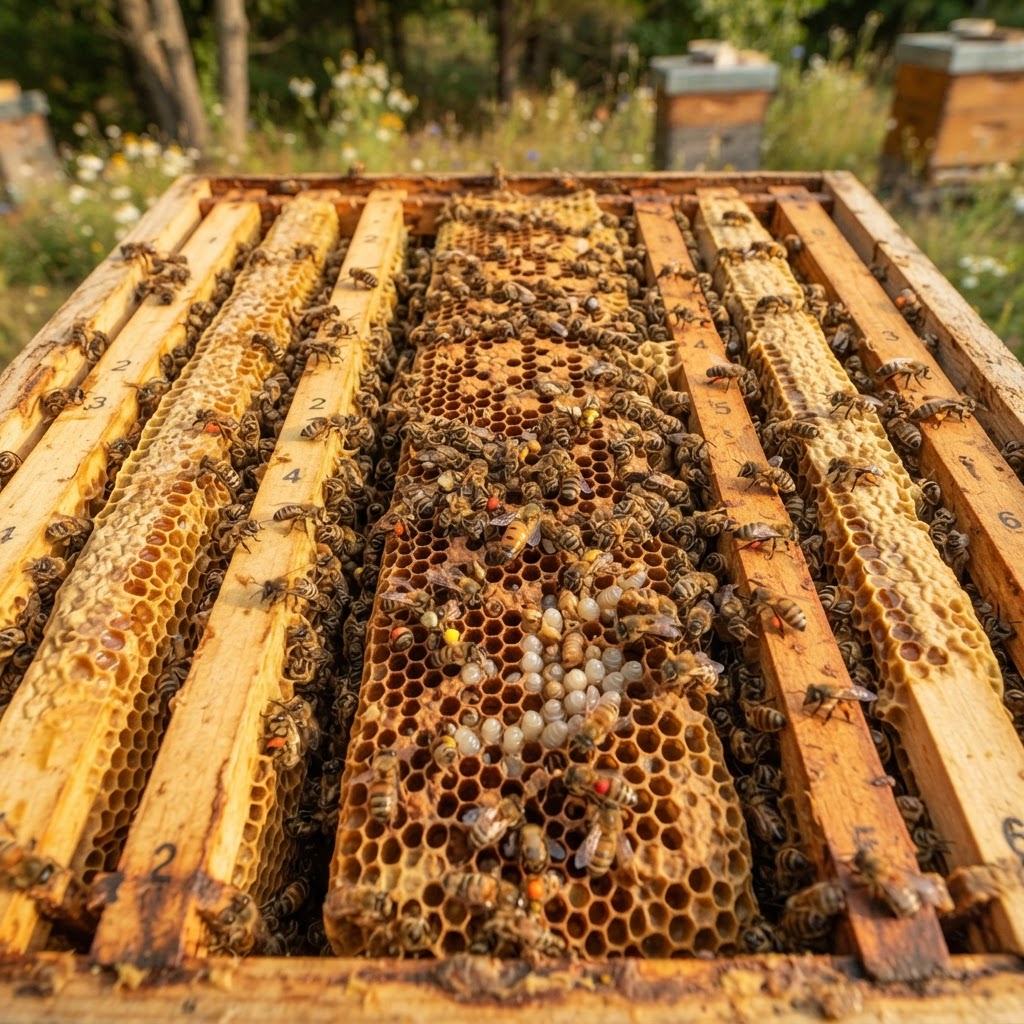
A healthy honeybee hive in Florida can house anywhere from 20,000 to 80,000 bees during peak season. Yet despite these enormous numbers, there's no boss bee, no manager, no central command. Every bee instinctively knows her role, and the colony self-organizes through a combination of pheromones, communication, and age-based task allocation.
This concept — the superorganism — is fundamental to understanding bees. Just as your body's cells work together to keep you alive, a hive's bees work together to keep the colony alive. Individual bees are like cells: they have specific functions, they communicate with chemical signals, and no single bee can survive long on her own.
The Architecture: Hexagonal Comb
The physical structure of the hive is the honeycomb — a masterpiece of natural engineering. Worker bees secrete wax from glands on their abdomen and mold it into perfect hexagonal cells. The hexagon is nature's most efficient shape: it maximizes storage space while minimizing the amount of wax needed to build it.
Each cell serves multiple purposes throughout its life:
- Nursery: Cells hold eggs, larvae, and pupae as new bees develop
- Honey storage: Nectar is dehydrated and stored in cells, then capped with wax
- Pollen storage: Collected pollen is packed into cells as protein-rich food
The comb is organized vertically, with brood (baby bees) in the center and honey stores above and to the sides — like a pantry stacked above the nursery.
The Three Castes: Queen, Workers, and Drones
Every hive contains three types of bees, each with a distinct role:
The Queen
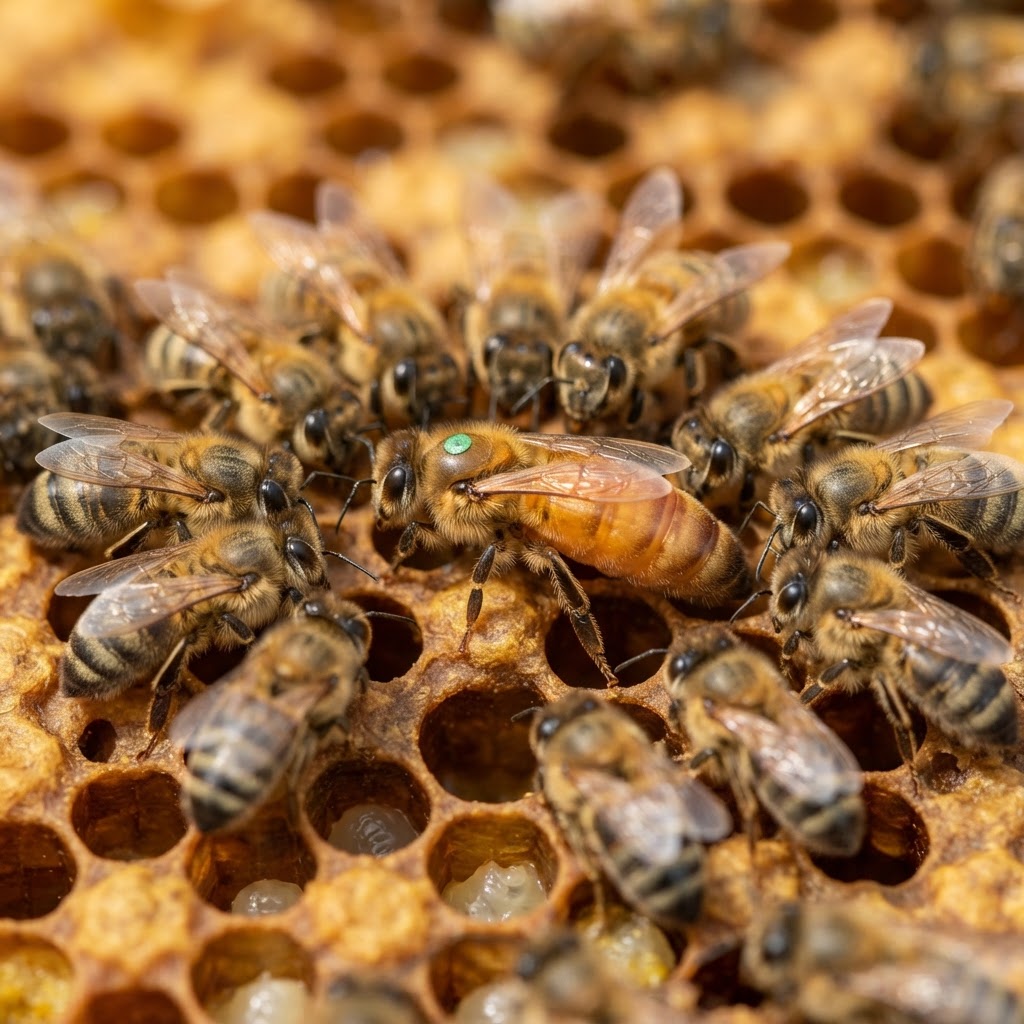
There is only one queen per hive, and she is the reproductive engine of the colony. Her sole job is to lay eggs — up to 2,000 per day during peak season. She produces pheromones that keep the colony unified and calm. Learn more about the queen bee's remarkable role
Worker Bees
Workers are all female and make up 95%+ of the hive's population. They do literally everything except lay eggs: nursing, foraging, building, guarding, temperature control, and more. A worker bee lives just 6-8 weeks in summer. Discover the incredible life of worker bees
Drones
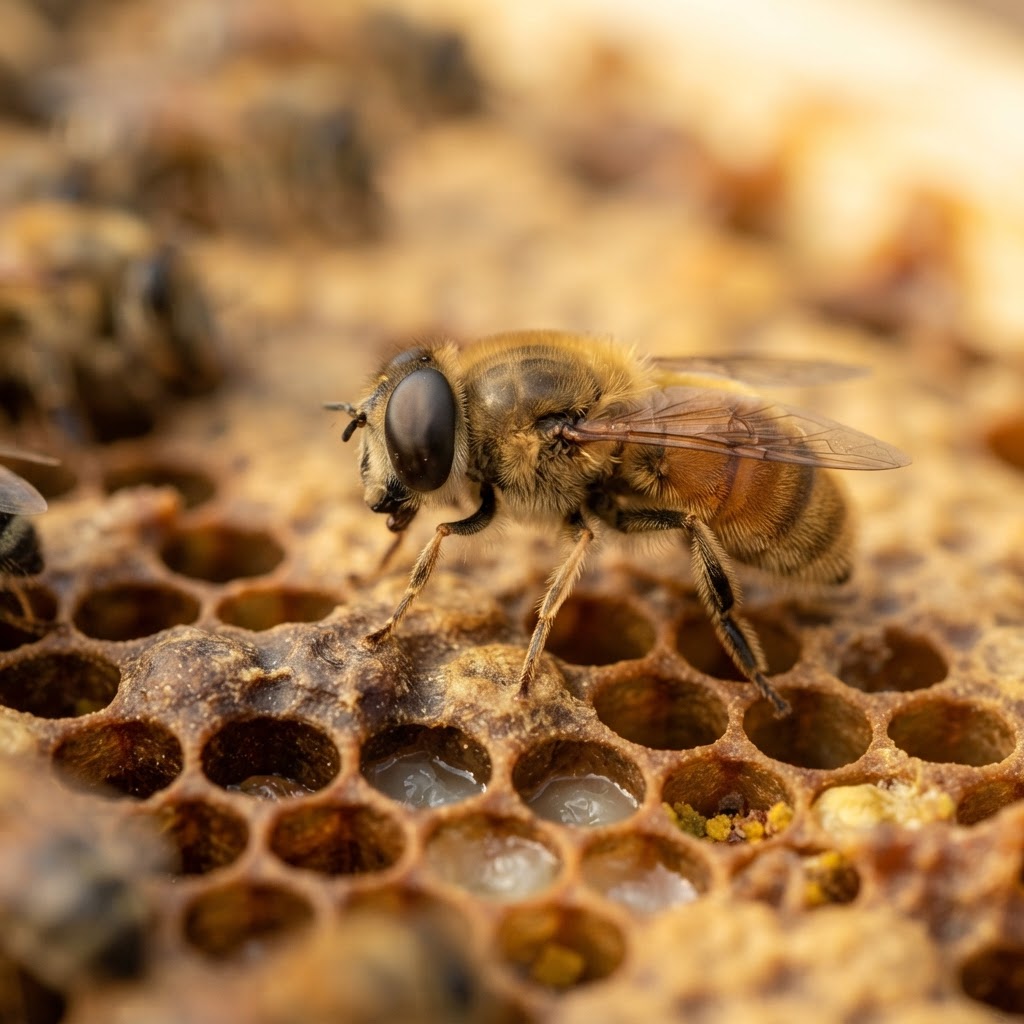
Drones are the male bees — larger, with no stinger, and a single purpose: to mate with a virgin queen from another colony. Read about the fascinating life of drone bees
Division of Labor: How Bees Know What to Do
One of the most remarkable aspects of hive life is how work is divided. Worker bees don't choose their jobs — their tasks are determined by their age, a system called "age polyethism."
Days 1-3: Cell cleaning — newly emerged bees clean their own cell and others Days 4-12: Nurse bees — feeding larvae, tending the queen Days 12-18: Comb building, receiving nectar from foragers, processing honey Days 18-21: Guard duty — protecting the hive entrance Days 21+: Foraging — flying out to collect nectar, pollen, water, and propolis
This progression isn't rigid. If the hive loses foragers, nurse bees will accelerate their development and start foraging early. The colony constantly adjusts its workforce based on need.
Communication: How 50,000 Bees Stay Coordinated
With no verbal language, bees have developed extraordinary communication methods:
Pheromones
Chemical signals are the hive's nervous system. The queen's pheromone spreads through physical contact as bees pass it from one to another, letting every bee know the queen is present and healthy. Alarm pheromones trigger defensive behavior, while brood pheromones tell nurses which larvae need feeding.
The Waggle Dance
When a forager discovers a rich nectar source, she returns to the hive and performs a figure-eight "waggle dance" that tells other foragers the exact direction and distance to the flowers. Explore the waggle dance in depth
Vibration Signals
Bees use vibrations — shaking their bodies while pressing against other bees — to stimulate activity, encourage foraging, or even tell the queen it's time to move during swarming.
Climate Control: The Hive's Built-In Thermostat
Bees maintain the internal hive temperature between 93°F and 95°F year-round, regardless of Florida's sweltering summers or occasional cold snaps. Learn how bees engineer the perfect hive temperature
From Hive to Jar: The Honey Journey
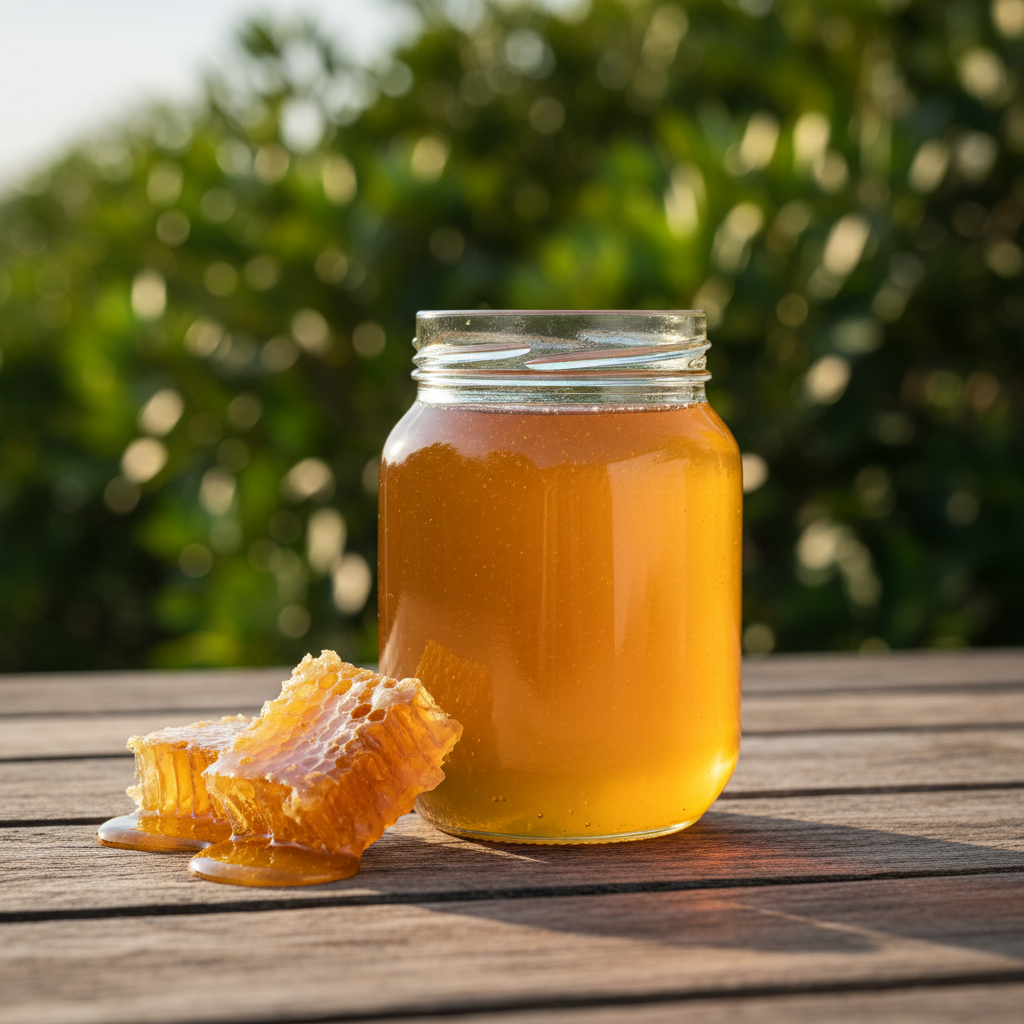
Every jar of our raw, unfiltered Black Mangrove honey begins with a forager bee visiting a mangrove flower. She collects nectar, stores it in her honey stomach, and flies back to the hive. House bees receive the nectar, process it through regurgitation and evaporation, and store it in comb cells. Once the moisture content drops below 18%, the cell is capped with wax — and honey is born.
Discover the incredible journey of how bees make honey
Why It All Matters
Honeybees are responsible for pollinating approximately one-third of the food we eat. Without them, our food system would collapse. Here in Apollo Beach and the Tampa Bay area, our rescued bees also play a vital role in sustaining the coastal mangrove ecosystem. Read about why bees matter to every bite of food
Experience the Difference
At Tom's Coastal Honeybees, every jar of honey is a testament to the incredible collaboration that happens inside the hive. Our raw, unfiltered Black Mangrove honey is never heated or pasteurized, preserving all the natural enzymes, pollen, and flavor that 50,000 bees worked together to create.
Related Articles
Taste the Difference
Every jar of our raw Black Mangrove honey is the result of 50,000 bees working together. Experience the taste of Apollo Beach's coastal ecosystem.
Shop Raw Honey