The Waggle Dance: Nature's Most Extraordinary Communication
The Waggle Dance: Nature's Most Extraordinary Communication
In 1973, the Austrian ethologist Karl von Frisch won the Nobel Prize for decoding one of the most remarkable communication systems in the animal kingdom: the honeybee waggle dance. What he discovered stunned the scientific world — honeybees can communicate the exact location of food sources to their hive-mates through an elaborate, symbolic dance.
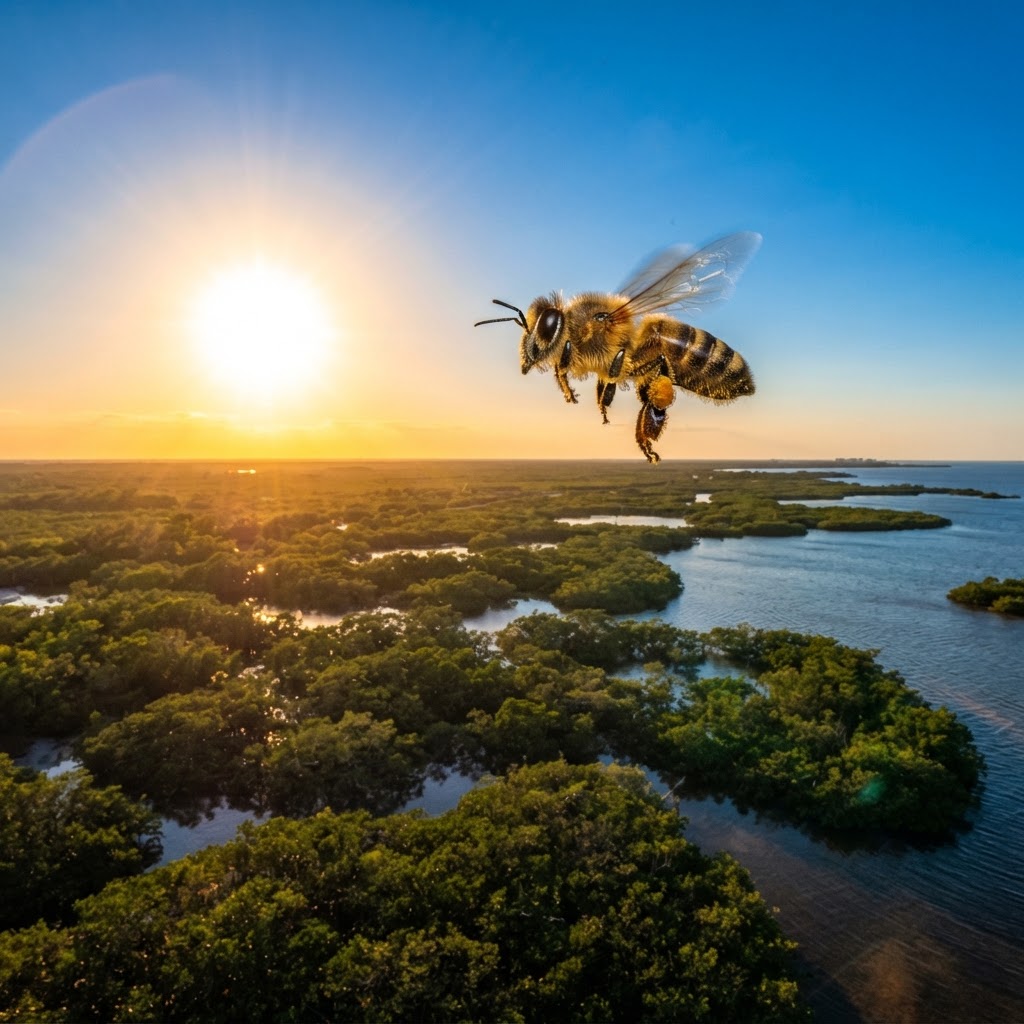
At Tom's Coastal Honeybees, our bees perform this dance every day during foraging season, directing their sisters to the best Black Mangrove blooms along the Apollo Beach coast. Understanding the waggle dance reveals just how sophisticated these tiny insects truly are.
What Is the Waggle Dance?
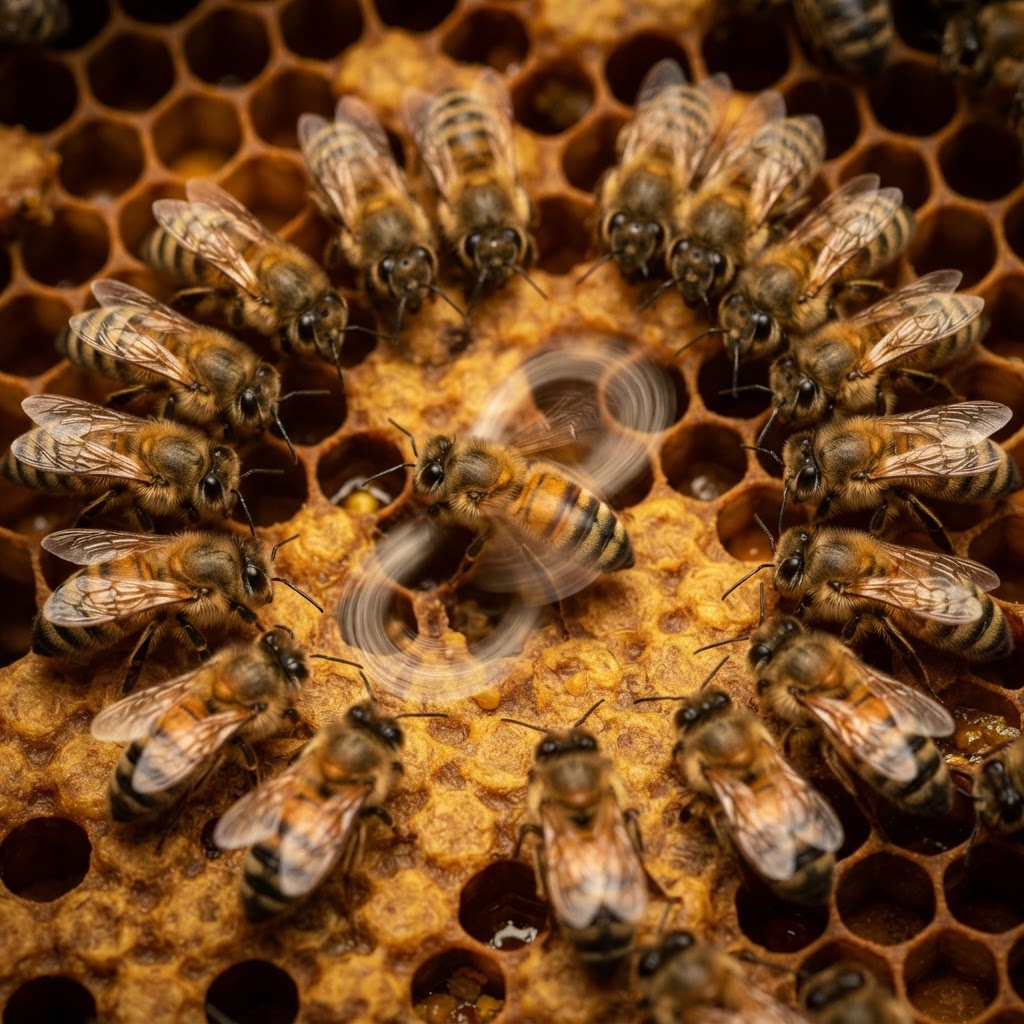
When a forager bee discovers a rich nectar source, she returns to the hive and performs a figure-eight pattern on the vertical face of the honeycomb. This dance has three critical components:
1. The Waggle Run
The center of the figure-eight is a straight line called the "waggle run." During this run, the bee vibrates her abdomen from side to side (the "waggle") while moving forward. The duration of the waggle run communicates distance — the longer the waggle, the farther the food source.
2. The Direction
The angle of the waggle run relative to vertical on the comb communicates direction. The bee translates the angle of the food source relative to the sun into an angle relative to gravity on the comb:
- If the food is directly toward the sun, the bee waggles straight up
- If the food is away from the sun, the bee waggles straight down
- If the food is 90 degrees to the right of the sun, the bee waggles 90 degrees to the right of vertical
3. The Return Loops
After each waggle run, the bee circles back to the starting point — alternating left and right to form the figure-eight. The vigor and duration of the dance communicate the quality of the food source.
Decoding the Dance: Distance
The relationship between waggle duration and distance is remarkably precise. A waggle run lasting 1 second typically indicates a food source about 1,000 meters (0.6 miles) away. A 2-second waggle means about 2,000 meters. The exact calibration varies slightly between bee races, but within a hive, the system is consistent.
Bees can communicate distances from about 50 meters to several miles. For very nearby sources (within 50 meters), bees perform a simpler "round dance" that says "the food is close, search in all directions."
Decoding the Dance: Direction
The direction communication is perhaps the most astonishing part. The bee is dancing on a vertical comb inside a dark hive. She can't see the sun. Yet she translates the sun's position — which she observed during her flight — into a gravitational angle on the comb.
Even more remarkable: bees compensate for the sun's movement. If a bee found food at 10 AM and dances at noon, she adjusts the angle of her waggle run to account for the two hours of sun movement. She's doing trigonometry with a brain the size of a pinhead.
The Scent and Sound of the Dance
The waggle dance isn't purely visual. Dancing bees release pheromones that attract other foragers. They also produce distinctive buzzing sounds during the waggle run — sounds that may carry additional information about the food source.
Other bees follow the dancer, touching her abdomen with their antennae to sense the vibrations. They may sample the nectar she carries, which tells them what type of flower to look for. After following several waggle runs, the recruited bees fly out to find the food source.
Do Bees Actually Use the Dance?
For decades after von Frisch's discovery, some scientists were skeptical. Did the dance actually communicate location, or did bees simply follow scent trails? In 2005, researchers used radar to track individual bees and proved that recruited foragers fly directly to the location indicated by the dance. The waggle dance is real, and it works.
The Dance in Our Coastal Apiary
In our Apollo Beach apiary, the waggle dance directs foragers to the best nectar sources throughout the season. In spring and early summer, when Black Mangroves bloom along the coast, dancers may communicate locations several miles away — a stand of mangroves along the Little Manatee River, perhaps, or wildflowers in a Ruskin meadow.
The quality of the dance — how many waggle runs the bee performs and how vigorously — tells the hive whether the source is worth visiting. A mediocre source gets a few lazy waggles; an exceptional bloom of mangrove flowers gets an enthusiastic, extended performance.
A Language Without Words
The waggle dance is one of the few known examples of symbolic communication in non-human animals. Bees have essentially invented a language — a spatial language that uses movement and timing instead of words and grammar.
Learn how bees use the dance alongside their navigation skills
Related Articles
Taste the Difference
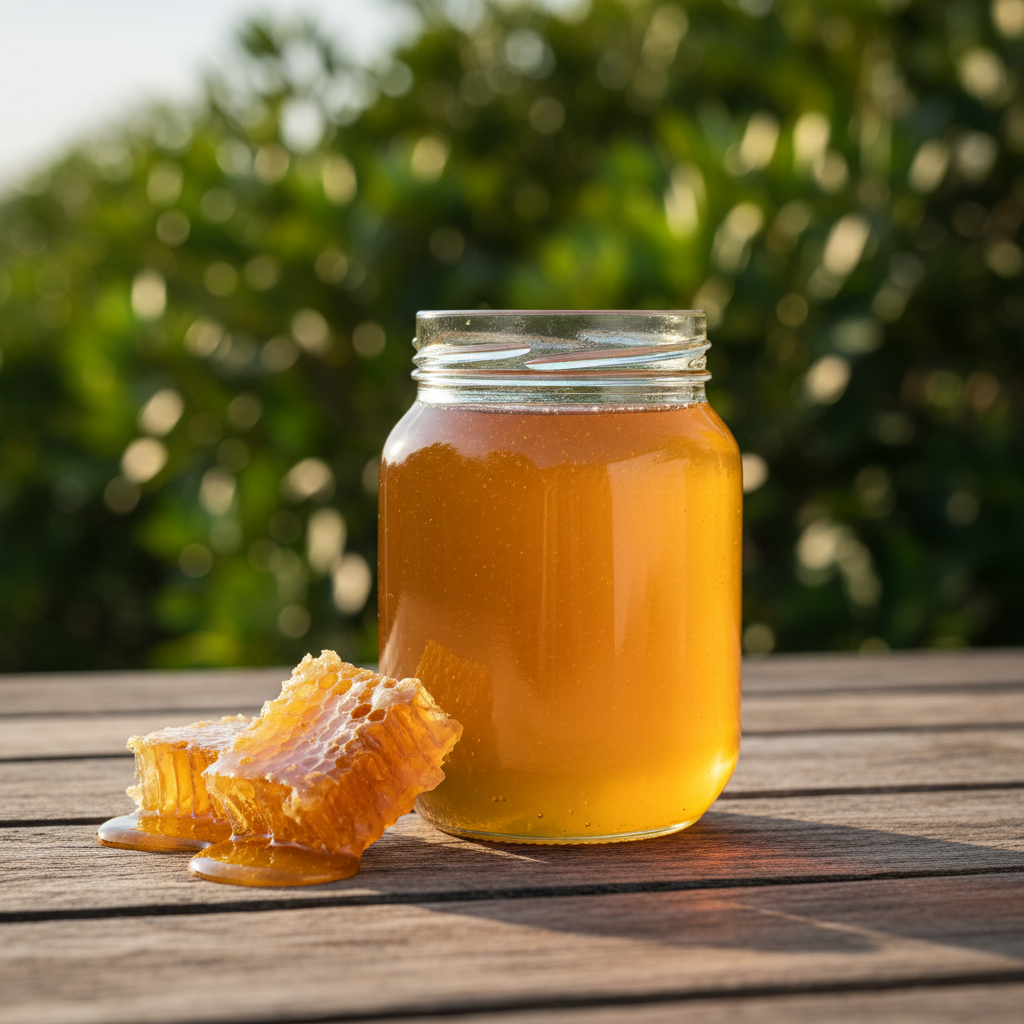
Every jar of our raw Black Mangrove honey is the result of 50,000 bees working together. Experience the taste of Apollo Beach's coastal ecosystem.
Shop Raw Honey