Honeybee Super Senses: Five Eyes and 50x Smell
Honeybee Super Senses: Five Eyes and 50x Smell
If you could see the world through a honeybee's eyes, you'd be amazed. Flowers that look plain white to humans glow with shimmering ultraviolet patterns. Scents too faint for us to detect are as clear as a flashing neon sign. And the air is full of information — magnetic fields, polarized light, electrical charges — that bees perceive as naturally as we perceive color and sound.
Understanding honeybee senses reveals why these insects are such extraordinary pollinators and how they produce the raw Black Mangrove honey we harvest here in Apollo Beach.
Five Eyes: A Dual Vision System
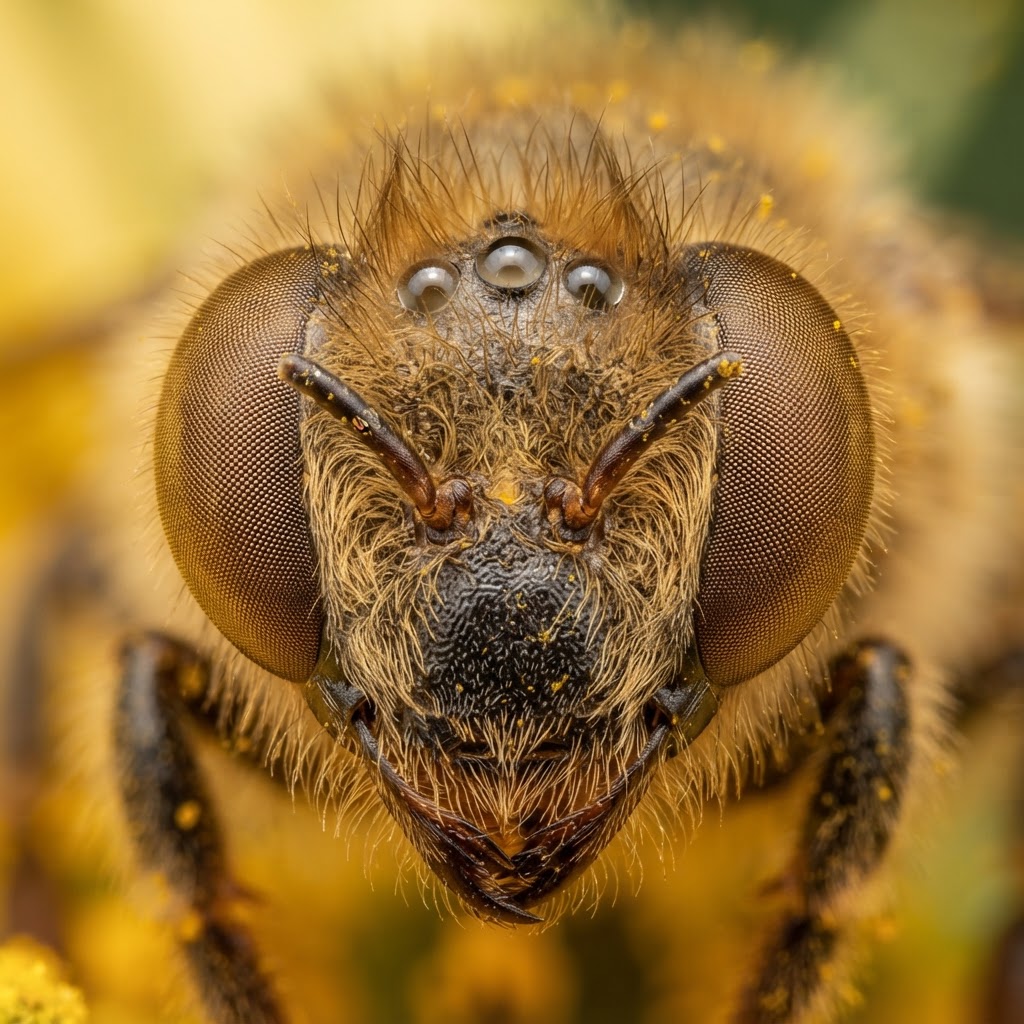
Honeybees have not two eyes, but five. Their visual system is actually two systems working together:
Compound Eyes (Two Large Eyes)
The two large eyes on either side of the bee's head are compound eyes, each made up of thousands of tiny hexagonal lenses called ommatidia. Each ommatidium captures a small piece of the visual field, and the bee's brain stitches them together into a mosaic image.
Compound eyes are excellent at detecting movement — far better than human eyes. A bee can see flicker at up to 200 flashes per second (humans see about 20). This is why bees can track fast-moving flowers in windy conditions and why a bee can dodge your swatting hand with ease.
Ocelli (Three Simple Eyes)
On top of the bee's head, between the compound eyes, sit three small simple eyes called ocelli. These don't form images — they detect light intensity. Their primary function is helping the bee navigate: they sense the position of the sun, the brightness of the sky, and help the bee maintain stable flight. Learn how bees use these senses to navigate
Ultraviolet Vision: Seeing the Invisible
Bees can see ultraviolet (UV) light — a part of the spectrum invisible to humans. This ability transforms how they see flowers. Many flowers that appear plain white or yellow to us have elaborate UV patterns called "nectar guides" — essentially landing strips that direct bees to the nectar and pollen.
These guides often look like bullseyes or runway markings, glowing brightly in UV light. They evolved specifically to attract bees and guide them to the reproductive parts of the flower, ensuring effective pollination.
For our bees foraging among Black Mangroves, UV vision helps them quickly identify the freshest, most nectar-rich blooms — the ones that will produce the best honey.
Color Vision: A Different Palette
Bees see color, but not the same colors we do. Their color vision shifts toward the shorter wavelengths:
- Bees can see: Ultraviolet, blue, green, yellow
- Bees cannot see: Red (red appears black to them)
- Bees' strongest color: Blue-purple (which is why bees are particularly attracted to blue and purple flowers)
This is why beekeepers sometimes paint hive entrances different colors — bees can distinguish between blues, yellows, and greens, helping them identify their own hive among many.
Smell: 50 Times More Powerful Than a Dog's
If a bee's vision is impressive, her sense of smell is extraordinary. A honeybee's olfactory system is estimated to be 50 times more sensitive than a dog's. Bees can detect scent molecules at concentrations as low as a few parts per trillion.
This incredible sense of smell serves many purposes:
Finding Flowers
Bees can smell nectar-rich flowers from hundreds of feet away. Different flowers have different scent profiles, and bees learn to associate specific scents with rewarding nectar sources.
Recognizing Hive-Mates
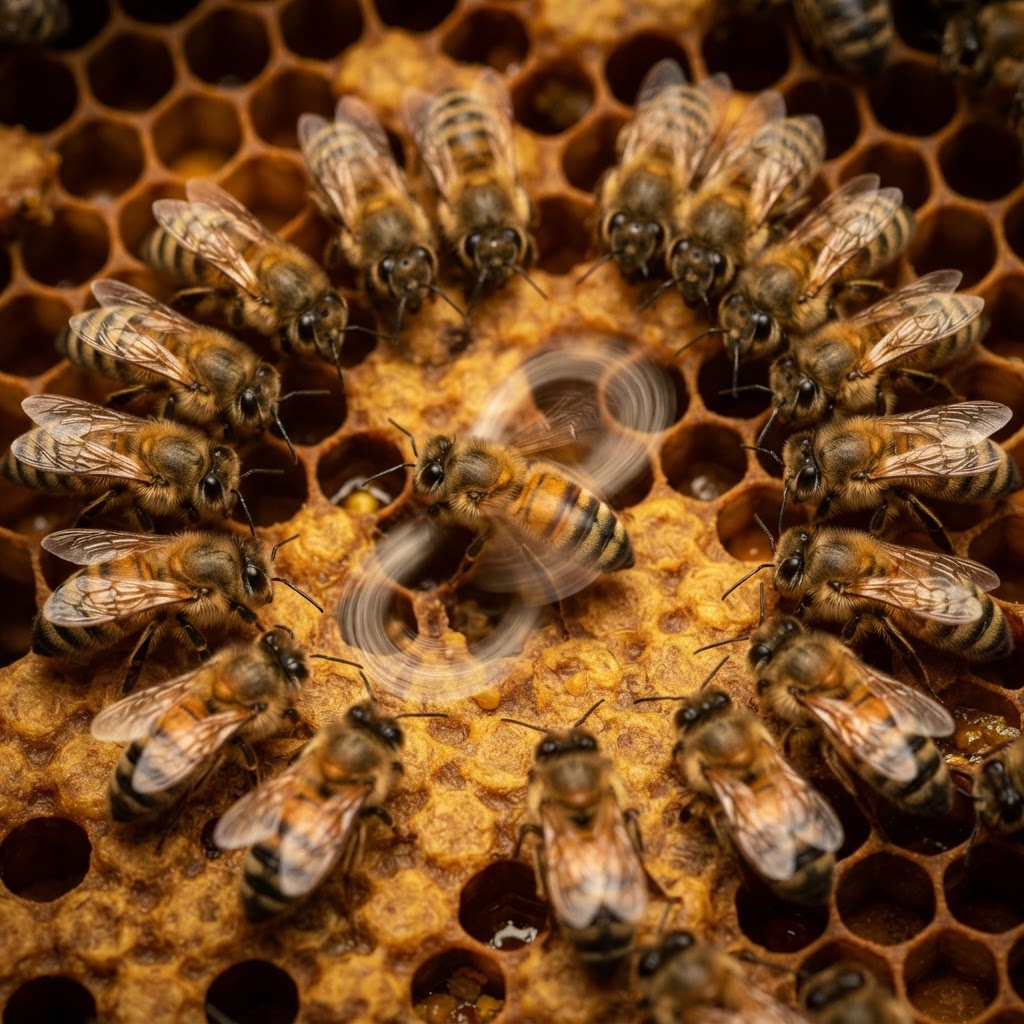
Every hive has a unique scent — a blend of pheromones, wax, honey, and propolis. Guard bees use smell to identify whether a bee approaching the entrance belongs to the hive. Bees from other hives smell different and are turned away (or attacked).
Detecting the Queen
The queen's pheromones are the chemical glue that holds the hive together. Learn about the queen's pheromones
Communicating Through Scent
Bees release alarm pheromones when threatened, attracting other bees to help defend the hive. The scent of banana (isoamyl acetate) is the bee alarm pheromone — which is why you should never eat bananas near a beehive.
Taste: More Refined Than You'd Think
Bees have taste receptors on their antennae, mouthparts, and the tips of their feet. When a bee lands on a flower, she can taste it before she even starts drinking. She can distinguish between different sugar concentrations, preferring nectar with higher sugar content — which produces better honey.
Hearing and Vibration
Bees don't have ears, but they can "hear" through vibration. They detect airborne sound waves and substrate vibrations through special receptors in their legs and antennae. This is how they perceive the buzzing of the waggle dance. Discover the waggle dance
Electric Field Detection
Perhaps the most surprising bee sense: bees can detect electric fields. Flowers have a slight electrical charge (usually negative), and bees build up a positive charge as they fly through the air. When a bee approaches a flower, the electrical attraction between them can actually help pollen jump onto the bee's body.
Bees can sense these electric fields, using them to determine whether a flower has recently been visited (a recently visited flower has less charge because the previous bee took the charge with her).
A World of Wonder
The next time you taste our raw Black Mangrove honey, consider the extraordinary sensory world that produced it. Thousands of bees, each with five eyes, 50x smell, UV vision, and electric field detection, navigated a sensory landscape we can barely imagine — all to find the perfect mangrove blossoms and turn their nectar into golden honey.
Related Articles
Taste the Difference
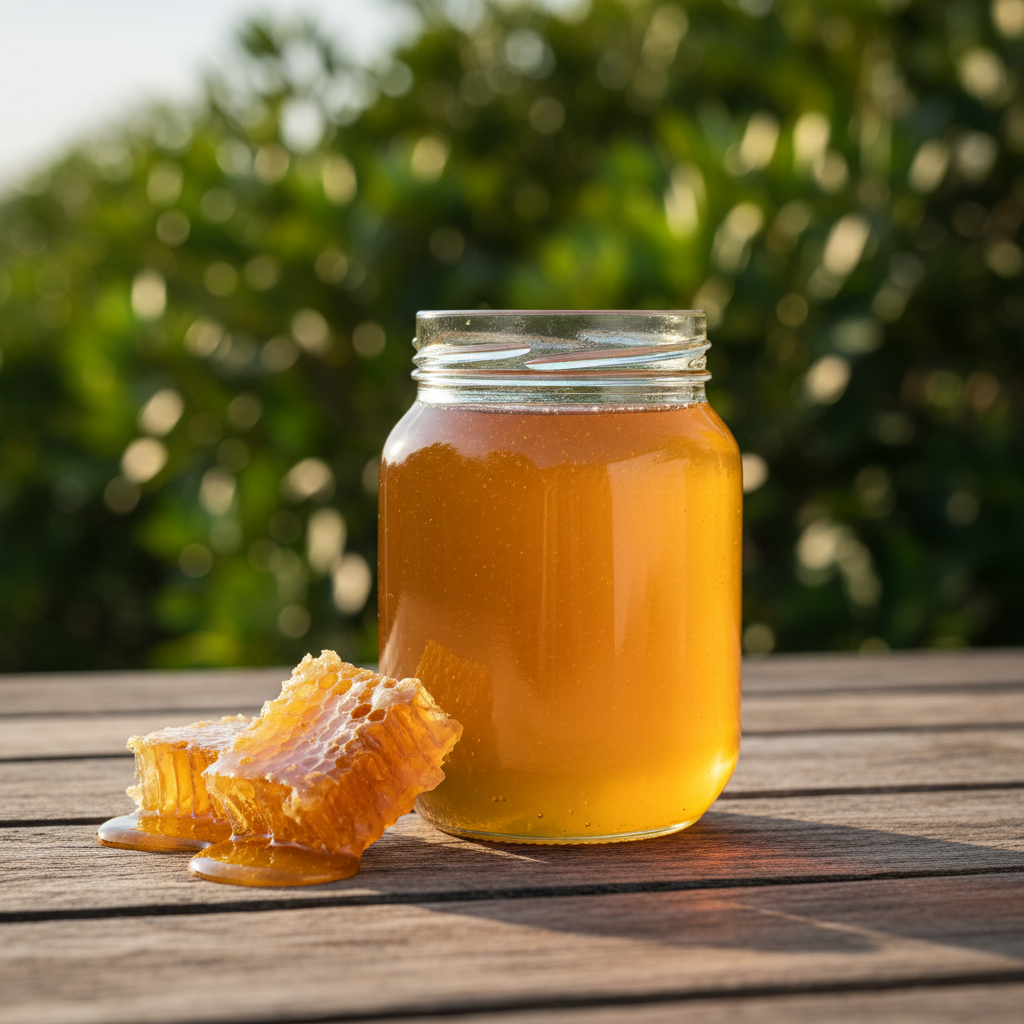
Every jar of our raw Black Mangrove honey is the result of 50,000 bees working together. Experience the taste of Apollo Beach's coastal ecosystem.
Shop Raw Honey