How Honeybees Navigate: Finding Their Way Home
How Honeybees Navigate: Finding Their Way Home
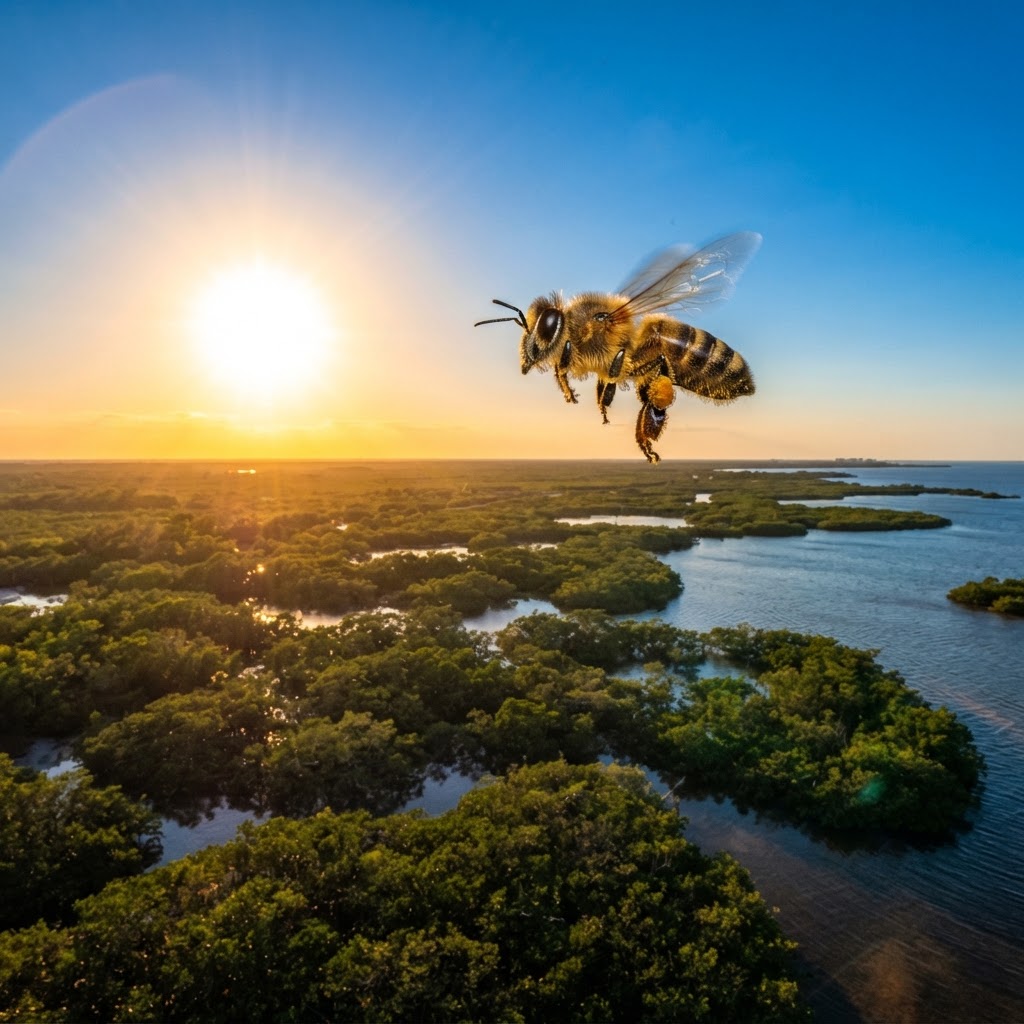
Imagine flying five miles from home with no map, no GPS, no smartphone — and finding your way back unerringly. For a honeybee, this is daily life. A foraging bee may travel up to five miles from her hive in search of nectar, navigating through changing landscapes, shifting weather, and Florida's intense coastal sun. And she does it with a brain smaller than a sesame seed.
At Tom's Coastal Honeybees, our bees forage among the Black Mangroves and coastal wildflowers of Apollo Beach. Understanding how they find their way to these nectar sources — and back home again — reveals one of nature's most remarkable navigation systems.
The Sun Compass
The primary navigation tool for honeybees is the sun. Bees use the sun as a compass, tracking its position to determine direction. But they don't just fly toward the sun — they use its position relative to their flight path to maintain a straight course.
What's truly remarkable is that bees can see the sun even when it's hidden behind clouds. How? They detect polarized light — the patterns of light waves scattered by the atmosphere. Even on overcast days, the polarization pattern in the sky tells bees exactly where the sun is.
Bees also compensate for the sun's movement across the sky. The sun moves approximately 15 degrees per hour, and bees account for this shift when calculating their return path. A bee that flew east to a flower patch at 9 AM knows that by noon, the sun has moved — and she adjusts her return course accordingly.
The Internal Odometer
Bees don't just know which direction to fly — they know how far they've traveled. Research has shown that bees have an internal "odometer" based on visual flow. As they fly, the landscape streams past their compound eyes. The bee's brain measures how much visual scenery has passed by, giving her a precise sense of distance.
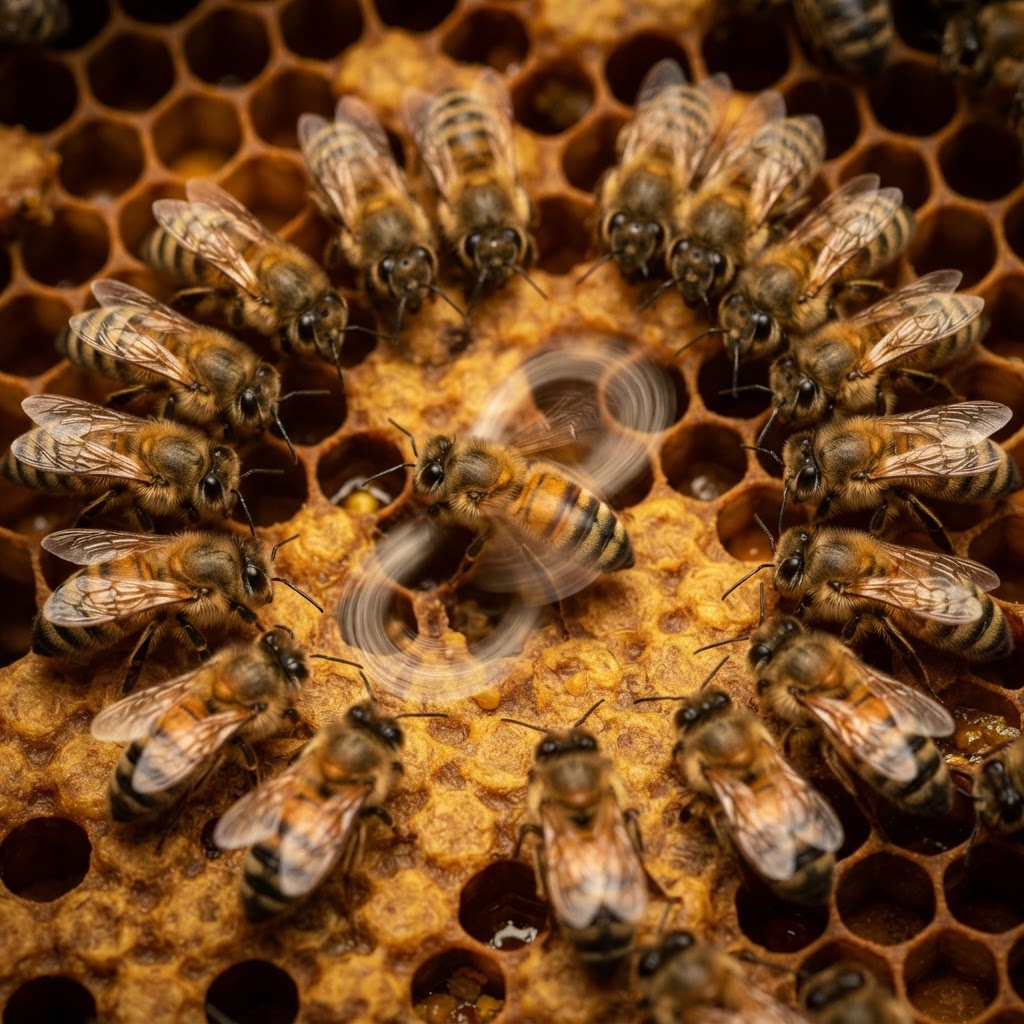
This visual odometer is so accurate that bees can communicate distance to other foragers through their waggle dance. Discover the waggle dance
Interestingly, the odometer works differently depending on the landscape. Flying over a richly textured landscape (like a field of flowers) registers more "distance" than flying over a smooth surface (like water). This is why bees sometimes underestimate distances when flying over water — a potential hazard for bees crossing Tampa Bay.
Visual Landmarks: The Bee's Map
Bees don't rely solely on the sun and their odometer. They also memorize visual landmarks along their flight path — trees, buildings, rivers, roads, and even specific shapes and colors. A bee flying from her hive to a patch of Black Mangrove blooms along the Apollo Beach coastline will memorize the route: "past the tall oak, over the canal, left at the white house, straight to the mangroves."
Research has shown that bees can recognize individual flowers by their patterns, remember the location of rewarding food sources for days, and even recognize human faces (though this skill is used for identifying landmarks, not people).
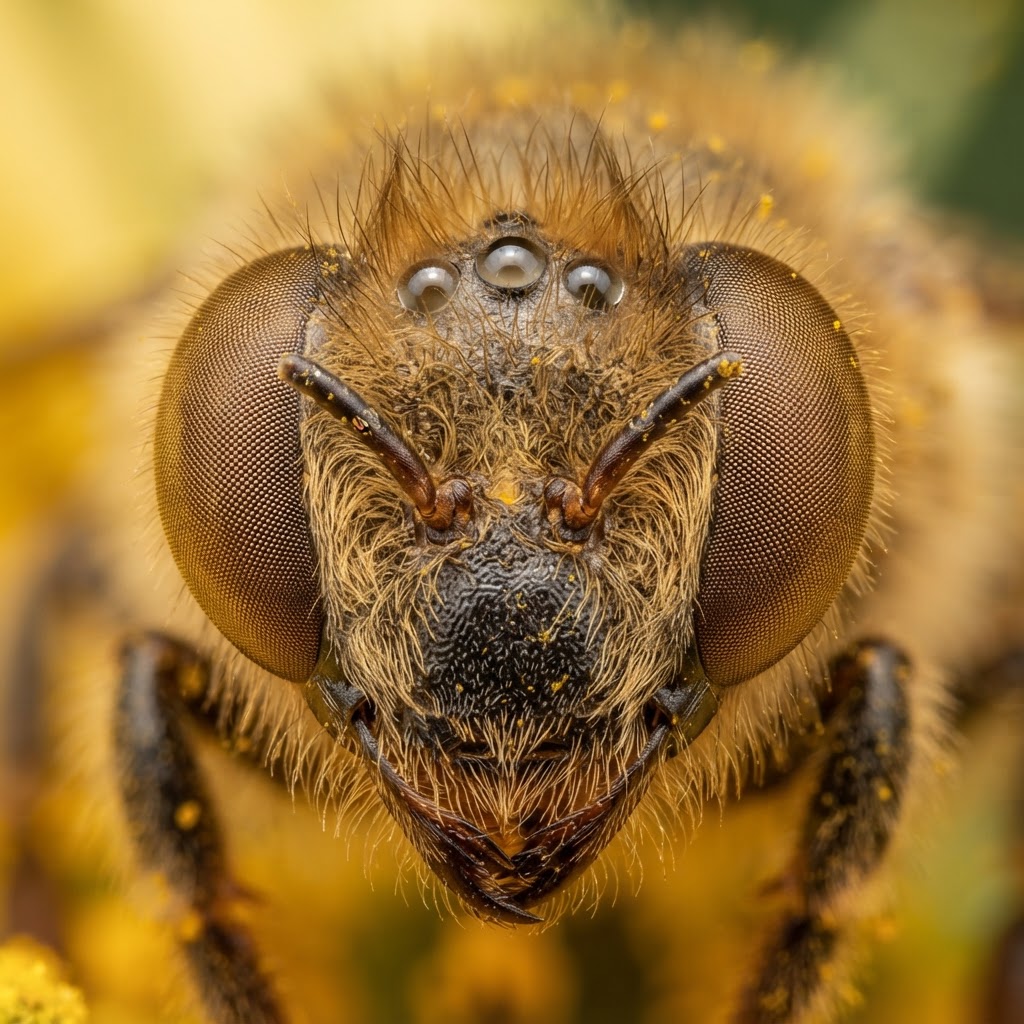
Bees also use their extraordinary vision to navigate. With five eyes — two large compound eyes and three simple ocelli on top of their head — they can see ultraviolet light, which reveals hidden "landing strip" patterns on flowers invisible to the human eye. Learn about bee super senses
The Magnetic Compass
Studies suggest that bees may also detect Earth's magnetic field, using it as a backup navigation system. Magnetite crystals found in bee bodies may act as biological compasses, helping bees orient themselves even when the sun is completely obscured.
This magnetic sense may be particularly important on overcast days when the sun's position can't be detected even through polarized light.
Finding the Hive: The Final Approach
When a foraging bee returns to the hive area, she doesn't just land. The hive entrance is a specific target among a complex landscape. Bees use a combination of visual landmarks, the hive's unique scent, and spatial memory to pinpoint the entrance.
Each hive has a distinctive odor — a blend of pheromones, wax, honey, and propolis. A returning bee can smell her hive from a distance, helping her locate it even if visual cues are confusing.
What Happens When Bees Get Lost?
Despite their remarkable navigation, bees can become disoriented. Pesticide exposure can impair navigation, causing bees to fly aimlessly and never return. Habitat loss removes the landmarks bees rely on. And in urban areas, reflective surfaces and electromagnetic interference can confuse their systems.
This is why protecting natural foraging areas — like the mangrove forests along Florida's Gulf Coast — is so important for bee health. Read about coastal bees and mangroves
The Miracle of Bee Navigation
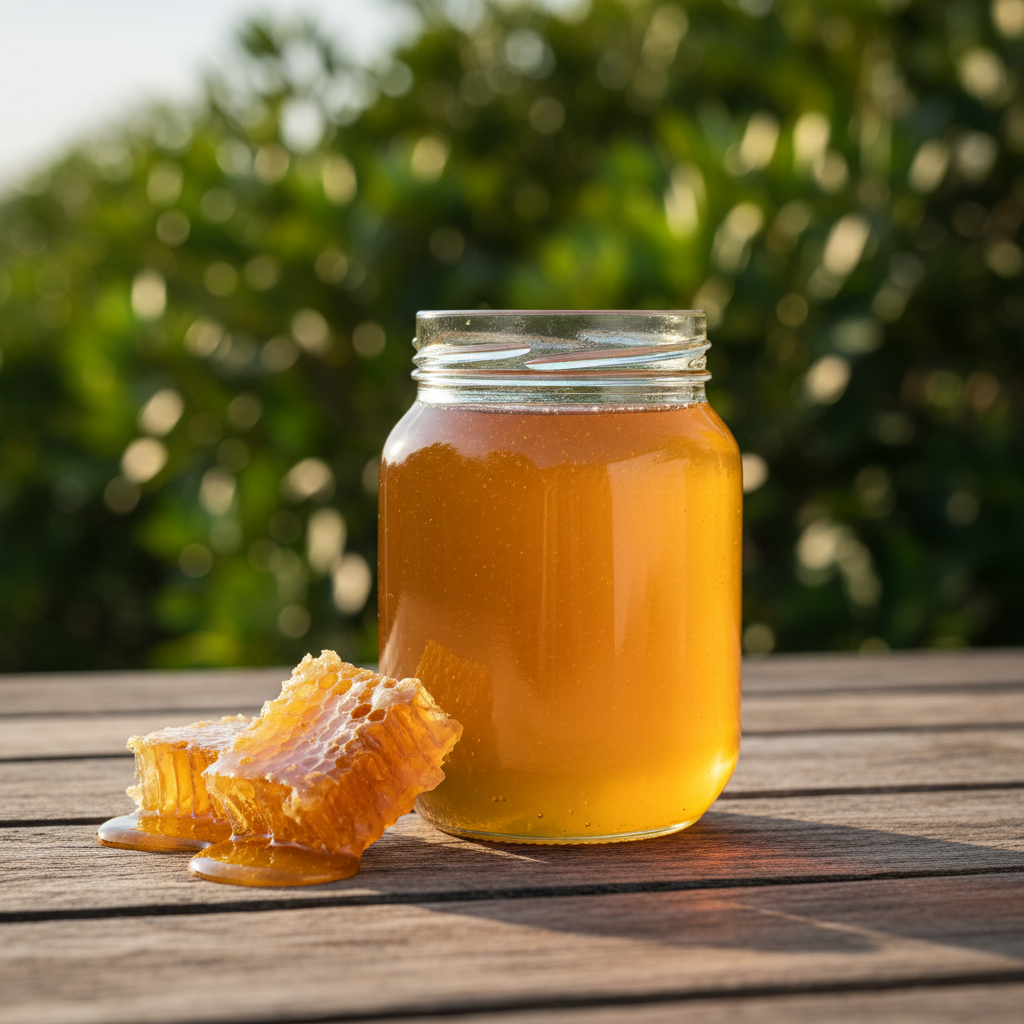
When you taste our raw Black Mangrove honey, you're tasting the result of a navigation system more sophisticated than anything humans had until the invention of GPS. Thousands of bees flew miles from their hive, found mangrove flowers using the sun, polarized light, landmarks, and magnetic fields, collected nectar, and flew home using the same systems in reverse.
And then they told their hive-mates exactly where to go — through a dance.
Related Articles
Taste the Difference
Every jar of our raw Black Mangrove honey is the result of 50,000 bees working together. Experience the taste of Apollo Beach's coastal ecosystem.
Shop Raw Honey